What Is a Digital Twin? Digital Twin Applications in Türkiye and Ankara
What is a digital twin, how does it work and what types exist? Digital twin applications in Turkish industry, energy and cities, and a 6-step guide for plants in Ankara.
- Digital twin
- Türkiye
- Ankara
- Industry 4.0
- SCADA
- Predictive maintenance
- OSTİM
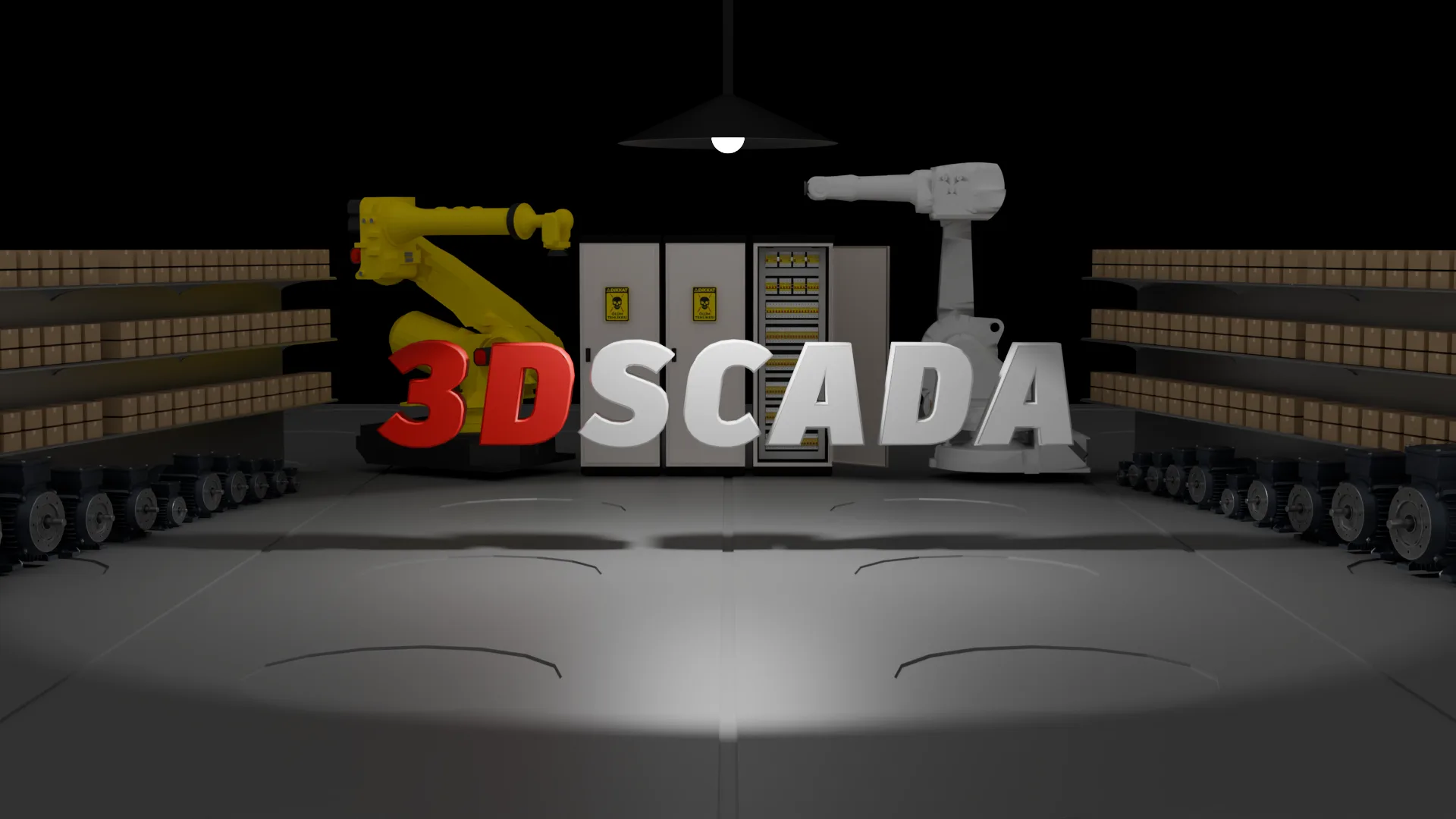
A digital twin is a virtual copy of a physical product, machine, plant or city that is continuously fed with sensor data. Whatever happens to the real asset shows up in its twin in real time, so you can monitor its condition, predict failures and test changes virtually first. In this guide we explain what a digital twin is, how it works, its types, where it is used in Türkiye and how industrial companies in Ankara can get started.
What is a digital twin?
A digital twin has three parts: the physical asset (a pump, a production line, a solar plant), its virtual model and the data flow that links the two. The model is not just a 3D drawing; it is kept up to date with data from field PLCs, sensors and meters. Combined with history, it answers not only “what is happening now” but also “where is this heading”.
The idea dates back to the early 2000s. The physical–virtual pairing that Michael Grieves described in 2002 in the context of product lifecycle management (PLM), together with NASA’s practice of monitoring and testing spacecraft through models on the ground, laid the foundation of today’s digital twin. As the Internet of Things, cloud computing and real-time 3D became mainstream, digital twins spread from aerospace to energy, manufacturing and city management.
Digital twin vs. 3D model, simulation and SCADA
| Concept | What it does | Connected to live data? |
|---|---|---|
| 3D model | Shows the asset’s geometry. | No |
| Simulation | Runs “what if” scenarios on assumed data. | Usually not |
| SCADA | Monitors and controls field equipment, mostly on 2D schematics. | Yes |
| Digital twin | Combines live data with a model to monitor, analyse, predict and test scenarios. | Yes, continuously |
In industrial plants these concepts complement each other: SCADA collects the data, the 3D model adds location and context, analytics and simulation look ahead. Together they form a working digital twin. We cover the visual side in detail in our article on 3D SCADA applications.
Types of digital twins
- Component twin: a single part, such as a bearing, a motor winding or an inverter board.
- Asset twin: a complete machine: pump, compressor, wind turbine, transformer.
- System twin: equipment working together: a production line, a pumping station, a solar site.
- Process twin: the end-to-end operation of a plant, from raw material to shipping, including energy and capacity.
- City and infrastructure twin: buildings, roads, power and water networks for planning and disaster management.
How does a digital twin work?
- Data collection: from PLCs, RTUs, sensors, power meters and existing SCADA/MES systems.
- Communication: data is moved securely over protocols such as OPC UA, Modbus TCP and MQTT.
- Model: a 3D model and a behaviour model (physics-, rule- or AI-based) of the asset are built.
- Mapping: every data tag is bound to the right object in the model, which updates in real time.
- Analysis and prediction: trends, alarms, predictive maintenance and efficiency analysis.
- Feedback: results are shown to operators and managers and, where needed, go back to the field as settings or commands.
Digital twins in Türkiye
In Türkiye, digital twins are part of the Industry 4.0 and digital transformation agenda and stand out in three areas:
Industry and manufacturing
For manufacturers in organised industrial zones, a digital twin is a way to see line efficiency (OEE), stop reasons, energy use and maintenance needs on one screen. Starting with one line or one critical machine and then scaling across the plant is the most common path.
Energy
Solar and wind plants are spread over large areas, which makes them some of the biggest beneficiaries: hundreds of inverters, strings and turbines are monitored with their locations, and under-performing equipment is found immediately. Substations and distribution grids use a similar approach. See our solar plant 3D SCADA and wind farm 3D SCADA projects.
Defence, aerospace and cities
Aerospace and defence were early adopters of digital twins in product design and manufacturing; STM ThinkTech’s review cites TUSAŞ’s cooperation with Siemens PLM Software on a holistic digital twin for its production facility. At city scale, the Ministry of Environment and Urbanisation’s project to create 3D topography and building models of urban areas is among the steps towards digital twins of Turkish cities.
Digital twins in Ankara
Ankara is an industrial and technology hub with a strong concentration of defence and aerospace, machinery and metalworking, electronics and software companies. Organised industrial zones such as OSTİM and Sincan, together with technology parks such as ODTÜ Teknokent, Bilkent Cyberpark and Hacettepe Teknokent, form a strong ecosystem on both the user and developer side.
For a plant in Ankara, digital twins pay off fastest in:
- Defence and aerospace suppliers: traceability, quality data and digital twins of test rigs.
- Machinery and metalworking shops: downtime, cycle time and energy tracking on CNC and press lines.
- Power plants and substations: remote monitoring, fault location and maintenance planning.
- Water, wastewater and municipal infrastructure: pumping stations, reservoirs and pump groups.
- Warehouses and logistics centres: a live view of stock, rack occupancy and vehicle movement.
Working with a local team has a practical advantage: site surveys, PLC and panel reviews, commissioning and training happen in the same city, quickly. From Pursaklar, Ankara, 3DSCADA delivers 3D modelling and digital twins, real-time systems and hardware development under one roof.
Benefits of digital twins
- Early fault detection and fewer unplanned stops through predictive maintenance
- Faults located instantly in the 3D model, shorter response times
- New lines, recipes or settings tested virtually first
- Energy use tracked per asset, with targeted efficiency gains
- Remote sites managed centrally, with fewer site visits
- A safe environment for operator training without touching the real plant
Points to watch and risks
- Data quality: a twin is only as accurate as its data; missing or faulty sensor data leads to wrong decisions.
- Cybersecurity: a digital twin connected to the OT network is a new attack surface. Plan OT/IT separation, role-based access, encrypted communication and logging from day one. In many projects the twin only reads data, and critical commands still go through the existing SCADA.
- Scope: starting with a pilot that has a measurable goal lowers cost and risk compared with modelling everything at once.
- Integration: build a data inventory covering different PLC brands, legacy systems and paper-based processes.
How to get started: 6 steps
- Set the goal: fewer stops, energy monitoring or remote management? Pick one measurable goal.
- Choose a pilot asset: a critical machine, a line or a station.
- Build a data inventory: which sensors, PLCs and systems produce which data, and what is missing?
- Prepare the model: a 3D model light enough for real time, from CAD drawings or site photos.
- Connect and test: data links, alarm rules and screens, first with simulated data.
- Measure and scale: compare the pilot’s results with the goal, then roll out to other lines and sites.
Conclusion
Digital twins are no longer reserved for large corporations; with the right scope they pay back quickly for a mid-sized manufacturer or a single power plant. If you would like to define the right pilot for your plant in Ankara or anywhere in Türkiye, contact us, or start by exploring our projects and live demos.
Sources
FAQ
Frequently asked questions
What is a digital twin?
A virtual copy of a physical product, machine or plant that is continuously updated with sensor data. It shows the real asset’s condition in real time and helps predict failures and test changes virtually first.
What is the difference between a digital twin and a simulation?
A simulation runs “what if” scenarios on assumed data. A digital twin is connected to the real asset with live data; it monitors the present and can run simulations on up-to-date data.
What data does a digital twin need?
Data from PLCs, sensors, power meters and existing SCADA or MES systems is usually enough. A data inventory is made at the start; where measurements are missing, extra sensors are recommended.
Can small and medium-sized companies use digital twins?
Yes. A pilot for one critical machine or line delivers measurable results without a large investment and can then be scaled step by step.
Is a digital twin secure?
Yes, if it is designed properly. OT/IT separation, role-based access, encrypted communication and logging should be planned from the start. In many projects the twin only reads data and critical commands still go through the existing SCADA.
Can we get on-site support for a digital twin project in Ankara?
Yes. 3DSCADA is based in Pursaklar, Ankara; site surveys, PLC and panel reviews, commissioning and training can be done on site in and around Ankara. We also work remotely and on site for plants elsewhere in Türkiye.
Blog
From the blog
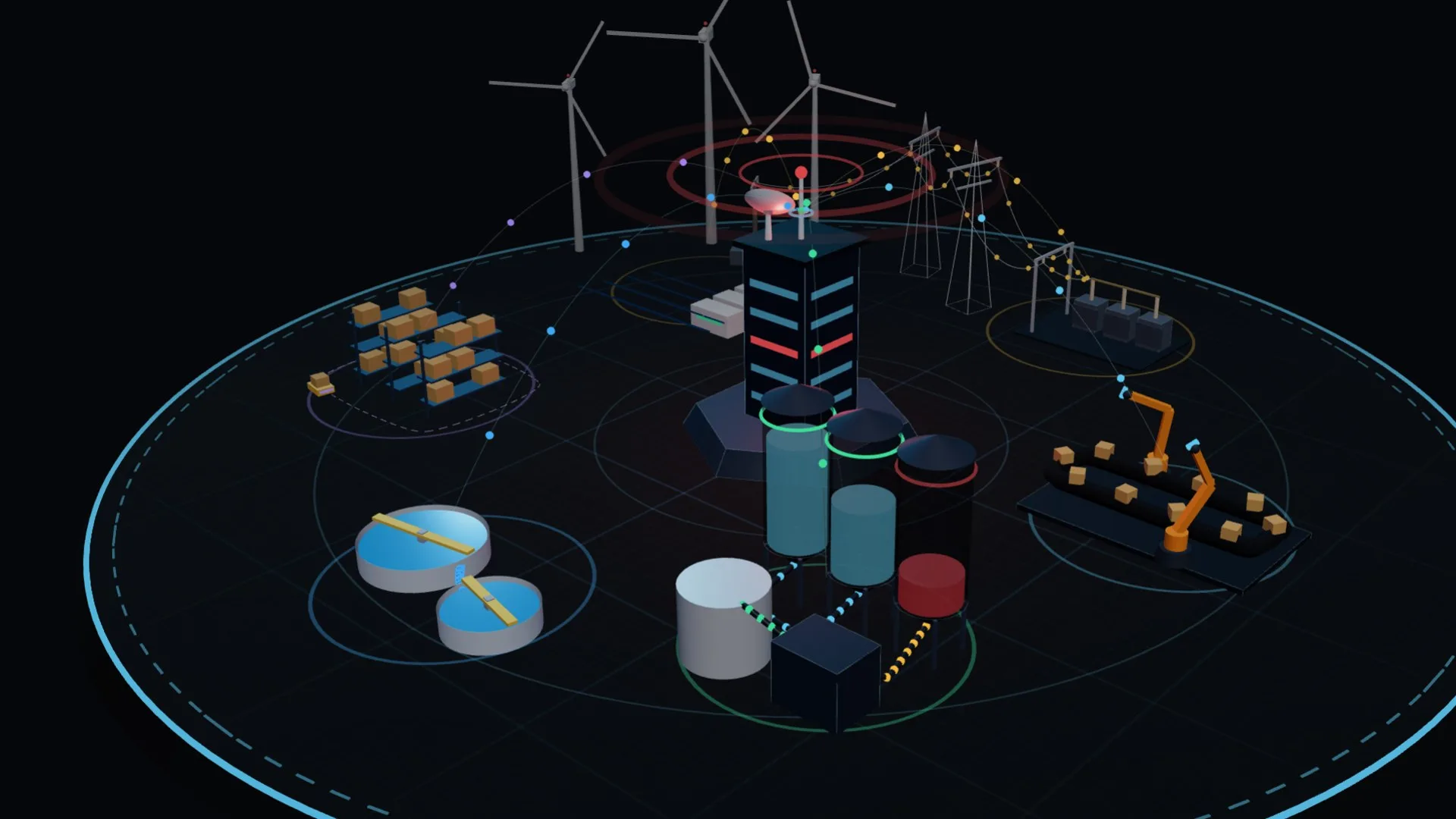
3D SCADA Applications: Use Cases, Architecture and Migration Guide
What is 3D SCADA and how does it differ from 2D HMI screens? 3D SCADA applications in energy, water, process and manufacturing, its architecture and how to migrate.
Read more →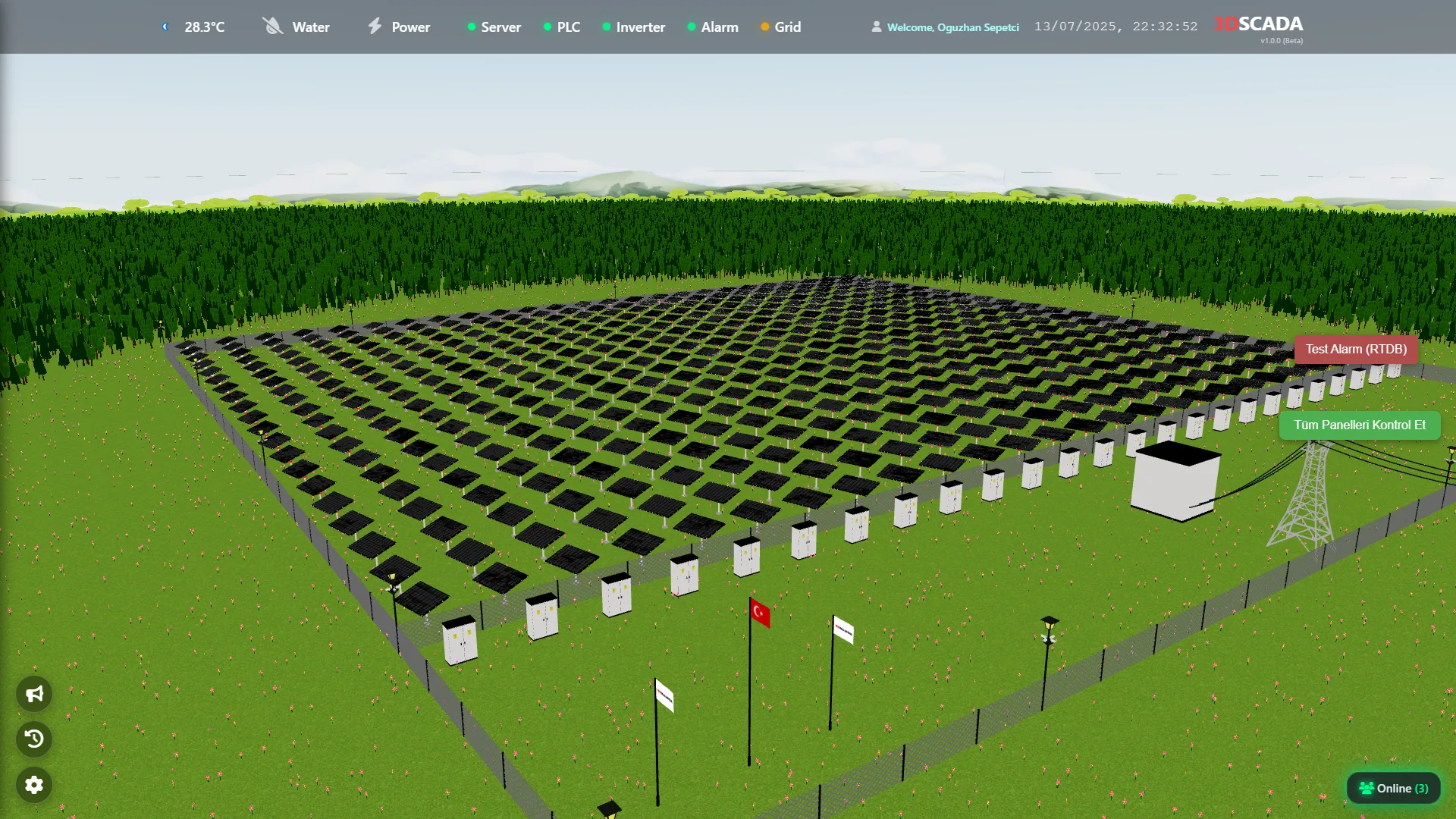
What is 3D SCADA and how does a digital twin help your plant?
A practical introduction to 3D SCADA and digital twins — what they are, how they differ from classic 2D HMIs and where they pay off.
Read more →Ready to bring your project to life?
Contact our expert team and discover your custom solution.